
Beauty injections
The smile is more than the teeth.
Lip and lower-face injectables placed by a dentist who reads the smile as a whole: the way the lips frame the teeth, the way the corners of the mouth sit at rest, the proportions that make a smile look like itself.
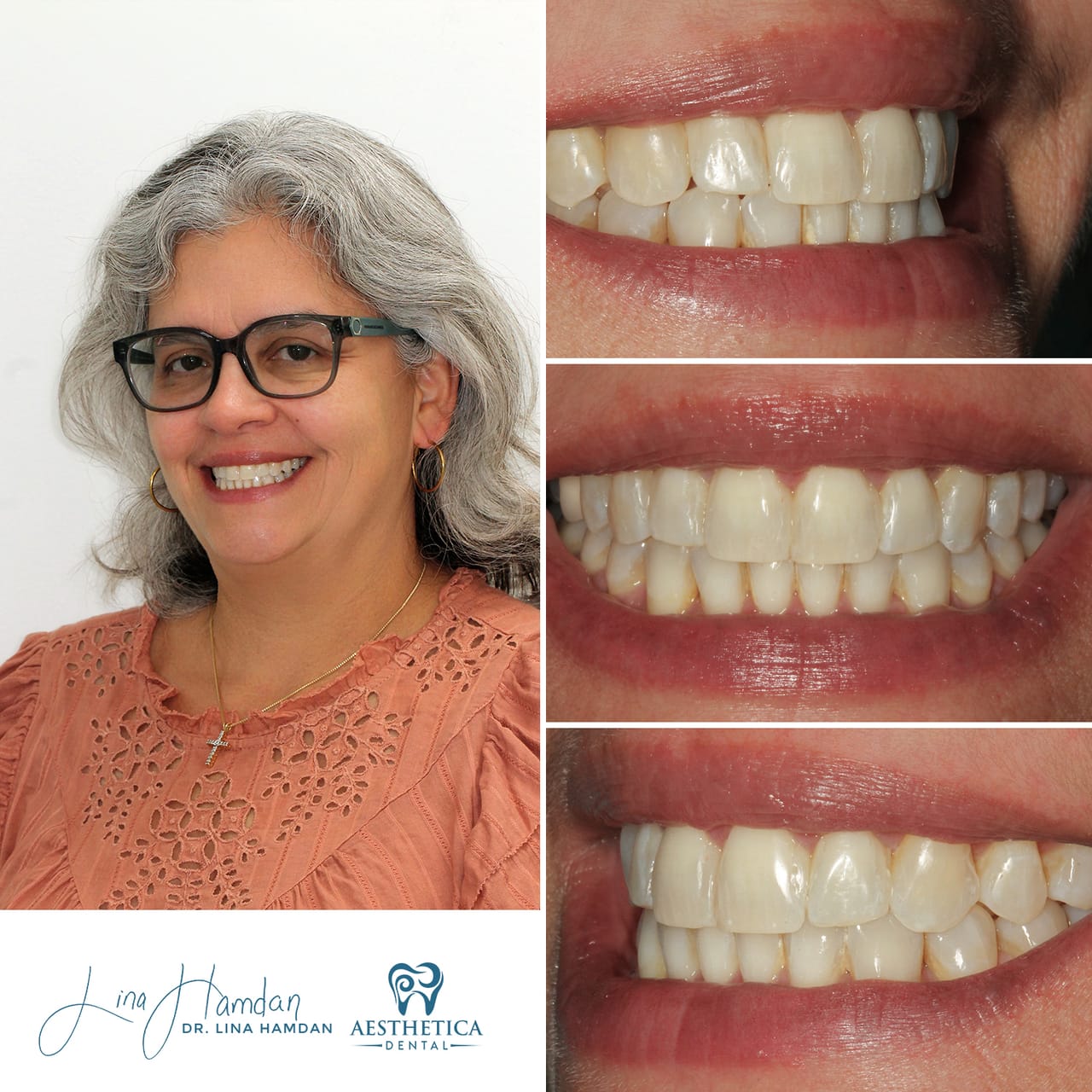
Why a dentist for beauty injections
The smile is not just the teeth. It is the way the lips frame the teeth, the way the corners of the mouth lift, the proportions of the lower face at rest. A cosmetic dentist who has spent years studying the smile as a whole brings a specific eye to injectable work, one trained on the relationship between the upper lip, the gum line, and the teeth, rather than on the lips in isolation.
That is the case for offering injectables here. The work integrates with the dental cosmetic plan. A patient finishing veneers leaves with the lip line that frames the new teeth properly. A patient considering injectables alone gets a candid conversation about whether the smile would benefit more from a different intervention.
Dr. Lina trained in facial aesthetics through the American Academy of Facial Esthetics; the work is grounded in the same anatomic literacy as the rest of the practice.
What we treat
Four indications make up most of the injectable work at Aesthetica Dental. Each is handled as part of a broader plan rather than a standalone procedure: the goal is a result that looks like one cohesive piece of work, not three different treatments stacked on top of one another.
Dynamic lines
Botox® relaxes the muscles beneath the skin that produce dynamic lines and wrinkles: the expressions etched over years of repeated motion around the eyes, between the brows, and across the forehead. The injection softens the surface without freezing the face. Results become visible within twenty-four to forty-eight hours and typically last three to six months.
Volume
Dermal fillers restore elasticity and fullness to areas of the face that have thinned with age, gently contouring features without surgery, and tailored to the proportions of the individual face. Filler results commonly last one to two years.
TMJ and bruxism
Targeted Botox® in the jaw muscles lowers the intensity of the contractions that drive teeth grinding, clenching, and the headaches and facial pain that follow them. This is the side of injectable work that almost no medical spa offers, and the side a dentist is uniquely positioned to assess, because the muscles in question are the same muscles that govern how the jaw closes, how the bite settles, and how the smile carries itself at rest.
Gummy smile
When the upper lip lifts too high while smiling and exposes more gum than the patient would like, a small amount of Botox® can relax the muscle so the lip rests in a more balanced position. The treatment is less invasive (and considerably more affordable) than surgical gum contouring, and is well suited to patients whose gum display is muscular rather than skeletal in origin.
Cosmetic Botox® and dental Botox®
A distinction worth drawing, because patients are rarely told it: cosmetic Botox® and dental Botox® use the same active ingredient, but they answer different questions.
Cosmetic Botox® is about appearance: relaxing the muscles that produce dynamic lines and wrinkles so the skin above them sits more smoothly. Dental Botox® is functional. It treats the TMJ symptoms that bring patients in with headaches, jaw soreness, and worn-down teeth, and it balances gummy smiles by adjusting the muscle that pulls the upper lip.
Dentists are trained on the anatomy of the head, face, and neck through every year of dental school: the same musculature that drives bite, expression, and the look of the smile at rest. That training is what makes a dentist a natural fit for both sides of the injectable conversation, not just the dental one. Patients sometimes do not realize that the same office handling their veneers or their bite is also the right office to handle the Botox® that finishes the picture.
What to expect
A consultation comes first. Dr. Lina assesses the resting and animated proportions of your face, listens to what you’d like to change, and is candid about what injectable treatment can and cannot do. Not every concern is best solved this way, and she will say so.
The treatment itself is performed in-office: brief, well-tolerated, and complete in a single appointment. Mild swelling or bruising for a day or two is common and resolves on its own.
Follow-up is built into the relationship. Dr. Lina sees you back to assess the result and refine if needed.
When beauty injections are a good fit
Injectables suit a refinement of the lower face: restoring lip volume that has thinned, softening lines around the mouth, balancing the way the smile sits at rest. They are not a substitute for dental work, nor a standalone solution to cosmetic concerns that are really about the teeth.
The patients who do best treat beauty injections as one piece of a longer cosmetic conversation rather than a single procedure in isolation. Most are based in Naperville or the western suburbs and come in already in conversation with Dr. Lina about other parts of the smile; the injectable plan slots into that wider one.
Questions
Frequently asked.
What is the difference between cosmetic Botox® and dental Botox®?
Cosmetic Botox® relaxes the muscles that produce dynamic lines and wrinkles, with the goal of refining appearance. Dental Botox® is a functional treatment: it relieves TMJ symptoms such as grinding, jaw clenching, and tension headaches, and is also used to balance gummy smiles. Same active ingredient; the difference lies in where the injection is placed and what it is meant to solve.
How long do Botox® and fillers last?
Botox® typically lasts three to six months. Dermal fillers generally last one to two years. Dr. Lina schedules a follow-up as the effect begins to fade so the result remains consistent over time.
Is Botox® a safe treatment?
Yes. Botox® is FDA-approved and considered safe and effective when administered by a trained, licensed professional. Dr. Lina is a member of the American Academy of Facial Esthetics and is trained in both the cosmetic and the dental applications of botulinum toxin.
Is there downtime?
Most patients return to normal activities the same day. Mild swelling or bruising at the injection sites is common for a day or two and resolves on its own.
Why a dentist?
Dentists work with the muscles, bones, and tissue of the lower face every day. Dr. Lina’s eye is trained on how the lips frame the teeth, how the smile sits in repose, and how small adjustments to the surrounding tissue change the way a smile reads as a whole.
How much does it cost?
Pricing depends on the treatment and the volume used. A written estimate is provided after consultation.
Related services
Also explore
- [PHOTO_SERVICE_VENEERS_PLACEHOLDER]
Porcelain veneers
Considered porcelain veneers.
- [PHOTO_SERVICE_SMILE_MAKEOVER_PLACEHOLDER]
Smile makeover
A full re-design of the smile.