
Teeth whitening
Teeth whitening.
Professional whitening (in-office or supervised at home) calibrated to lift years of staining without overshooting into the artificial-bright range that ages a smile.
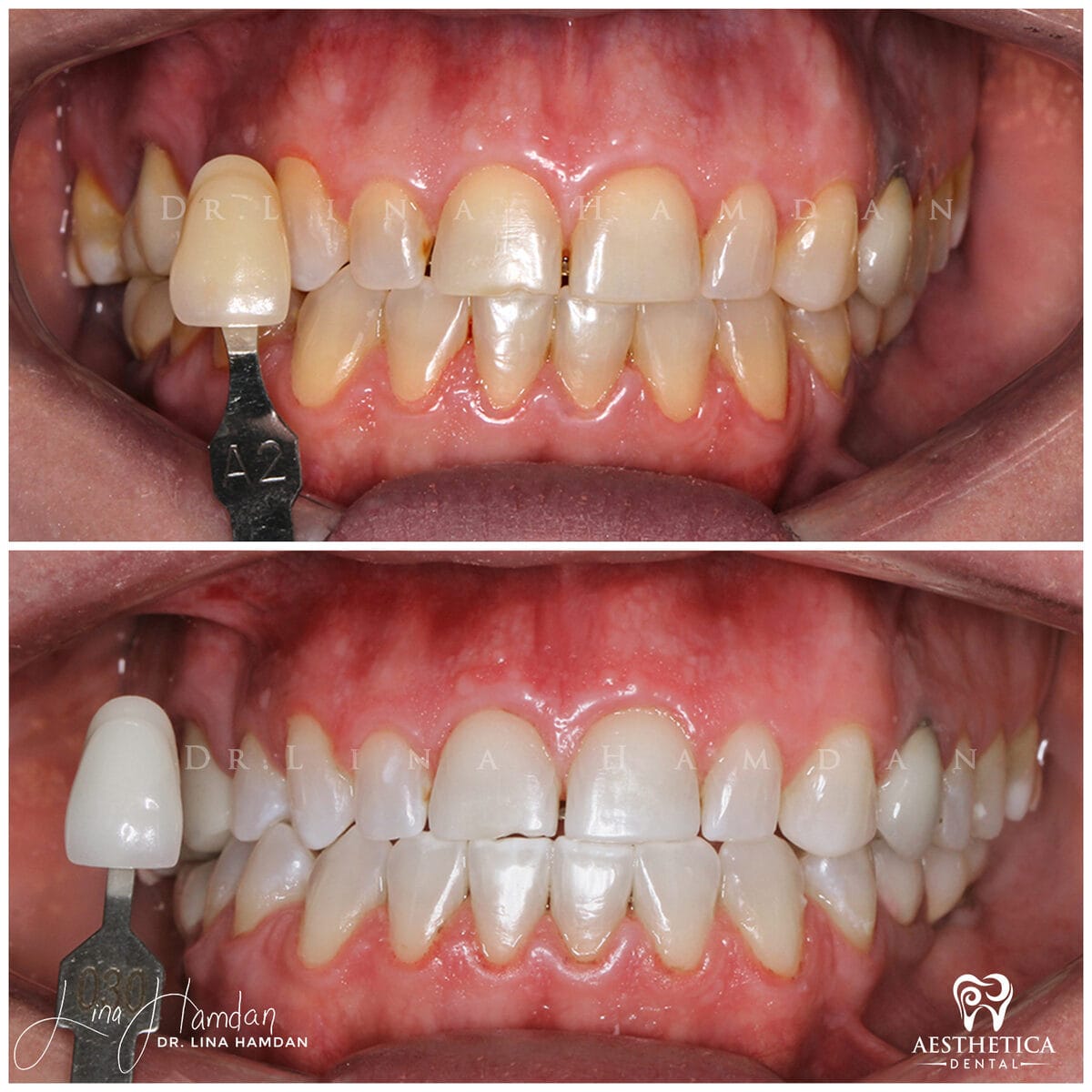
Why professional whitening
Over-the-counter whitening strips and store-bought kits work, in a limited way. They lift surface stain (coffee, tea, wine) at a slow pace, and they cannot deliver the deeper structural whitening that years of staining require. Professional whitening uses higher-concentration agents under controlled conditions to lift color further and more evenly.
The art is in the calibration. Whitening to the wrong shade (too bright, too cold, too uniform) ages a smile. The goal is a shade that reads as your teeth on a good day, not a different person’s teeth.
What to expect
Two formats are available. In-office whitening is completed in a single appointment, typically about an hour, with results visible the same day. Take-home whitening uses custom-fitted trays and a professional gel worn at home over one to two weeks for a more gradual lift.
Dr. Lina recommends a format based on your current shade, target shade, sensitivity history, and timeline. Many patients combine the two: in-office for an immediate baseline, take-home trays for maintenance.
Three in-office whitening systems
The practice offers three established in-office systems. The right choice depends on the starting shade, the timeline, and any history of sensitivity.
Laser Whitening. An active bleaching agent is applied to your teeth, then laser technology activates the bleach. Precise, fast results: significant improvement after one treatment.
Zoom®. A light-activated procedure that brightens your smile in about an hour. Convenient and fast.
Opalescence Boost®. A chemically activated whitening system that does not require light. Often chosen by patients with sensitivity concerns.
When whitening is a good fit
Whitening is appropriate for healthy teeth with surface or structural staining from age, diet, or habit. It is not effective on existing dental work: porcelain crowns, veneers, or composite bonding do not respond to whitening agents and may need to be replaced if a significantly brighter shade is desired afterward. Dr. Lina sequences whitening accordingly when restorative or cosmetic work is in the plan.
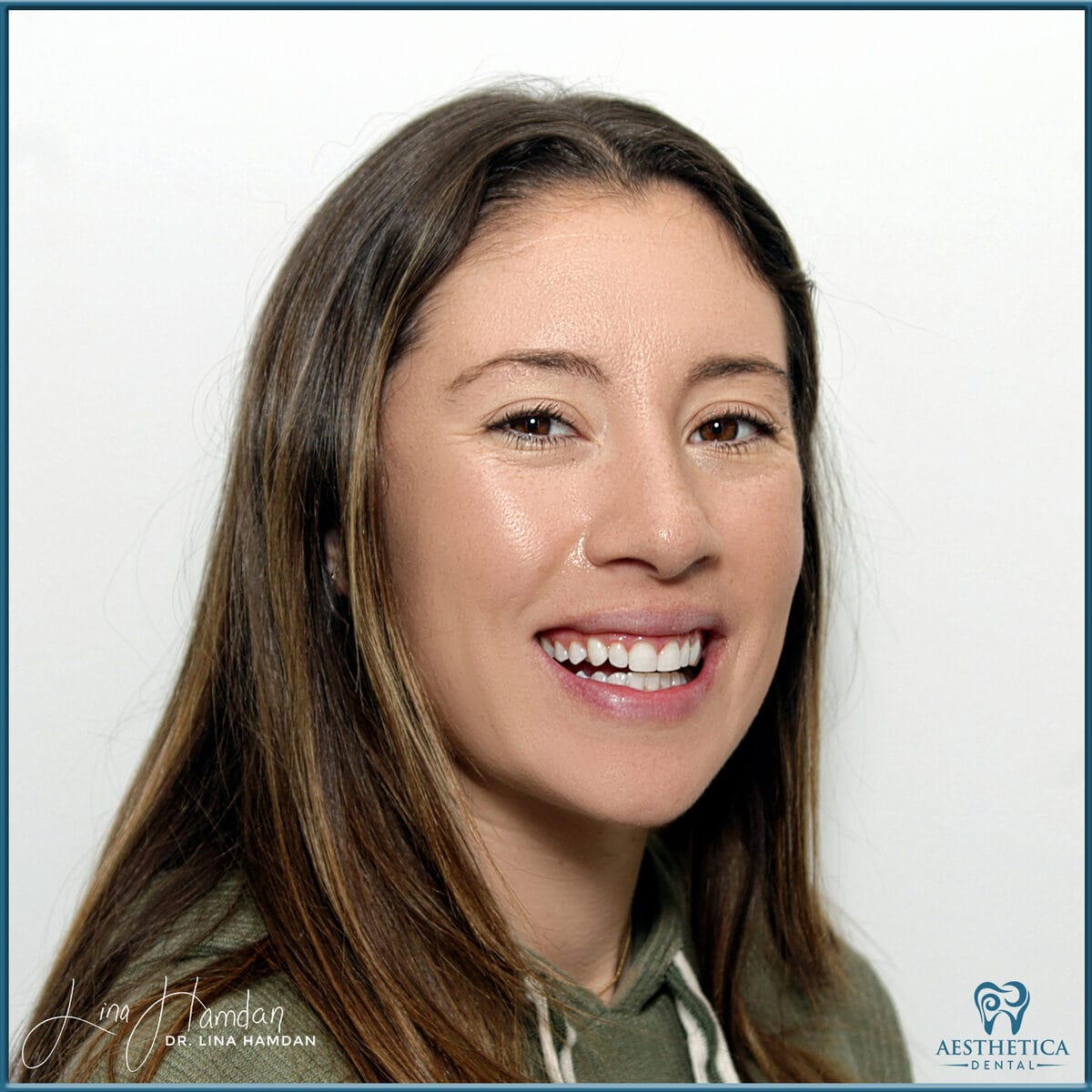
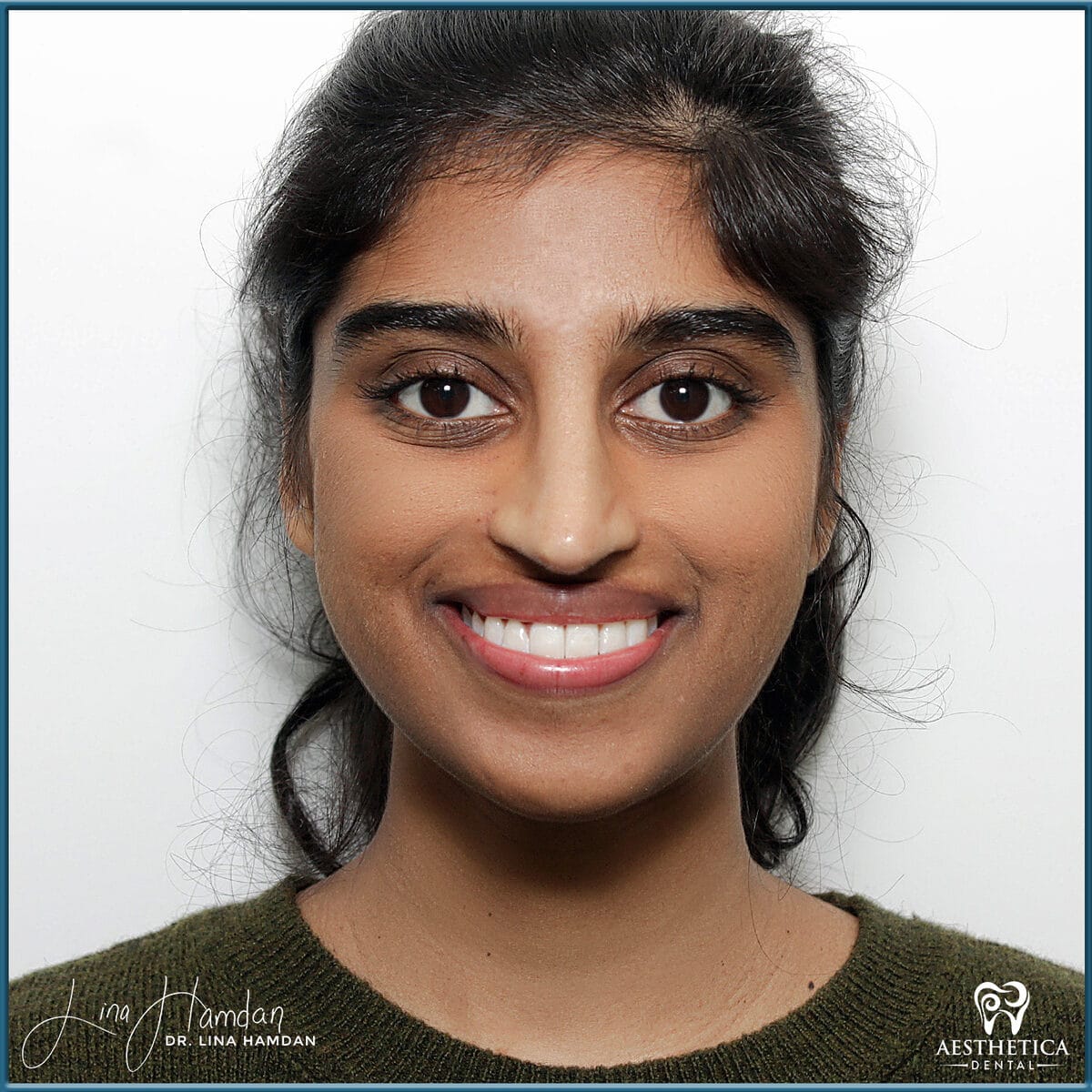
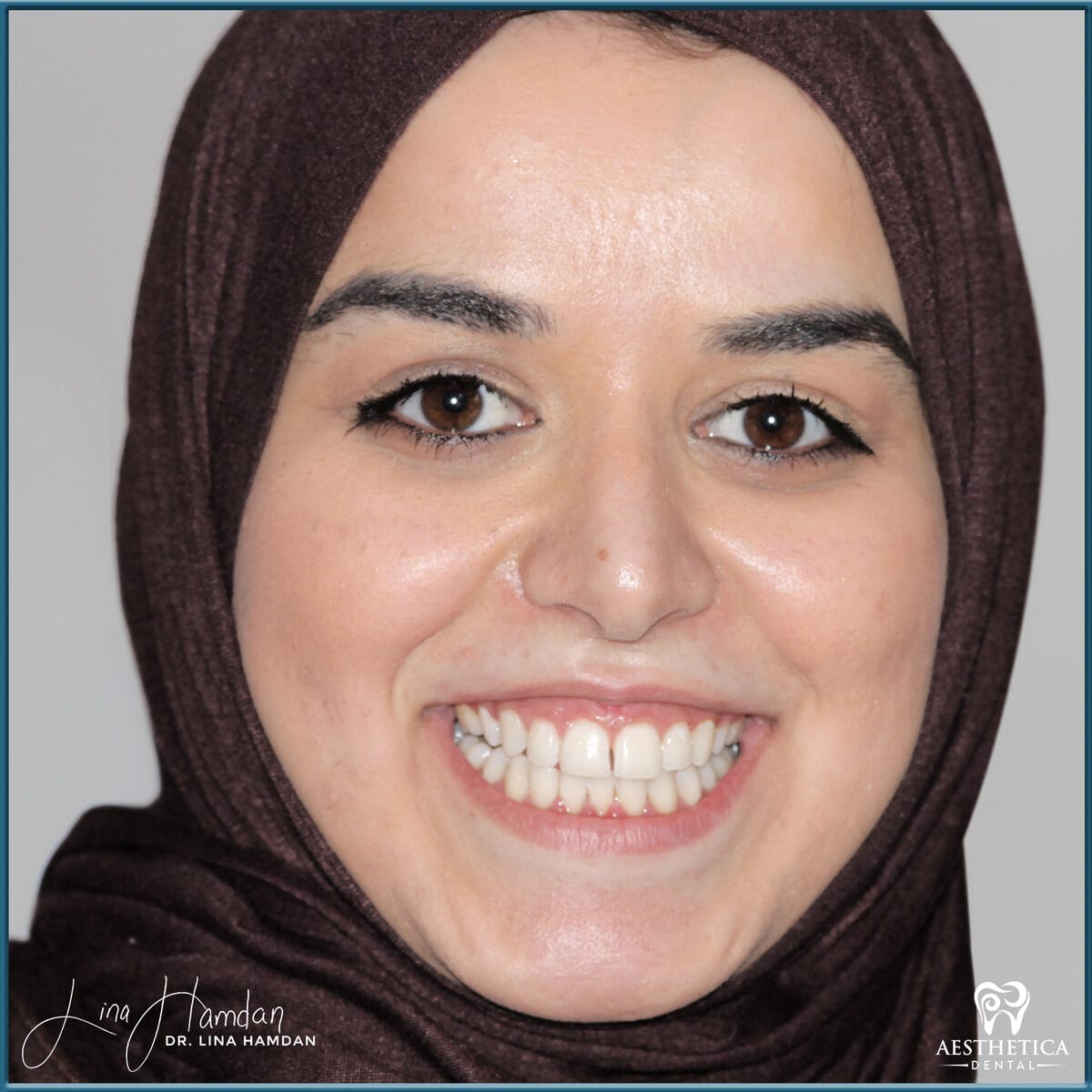
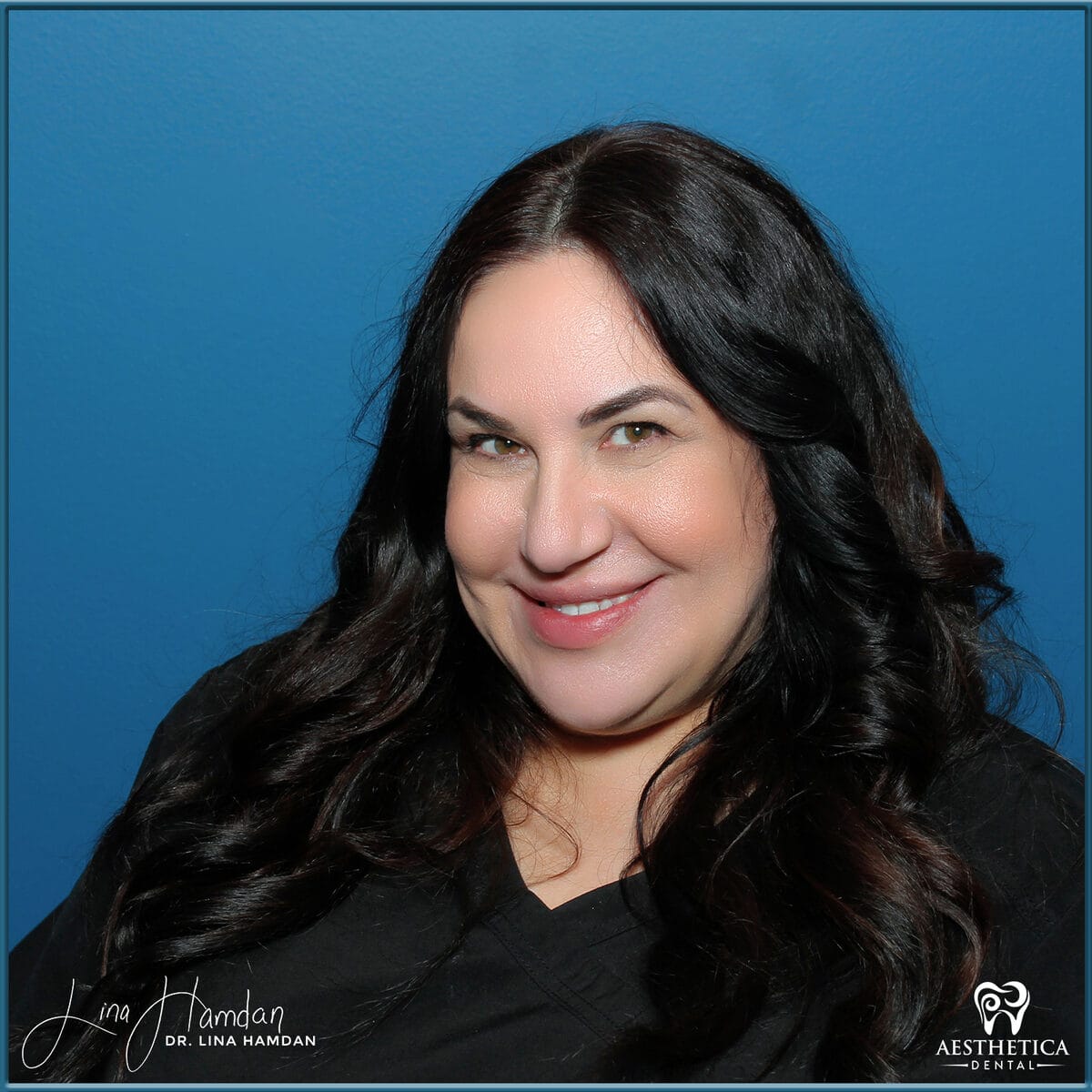
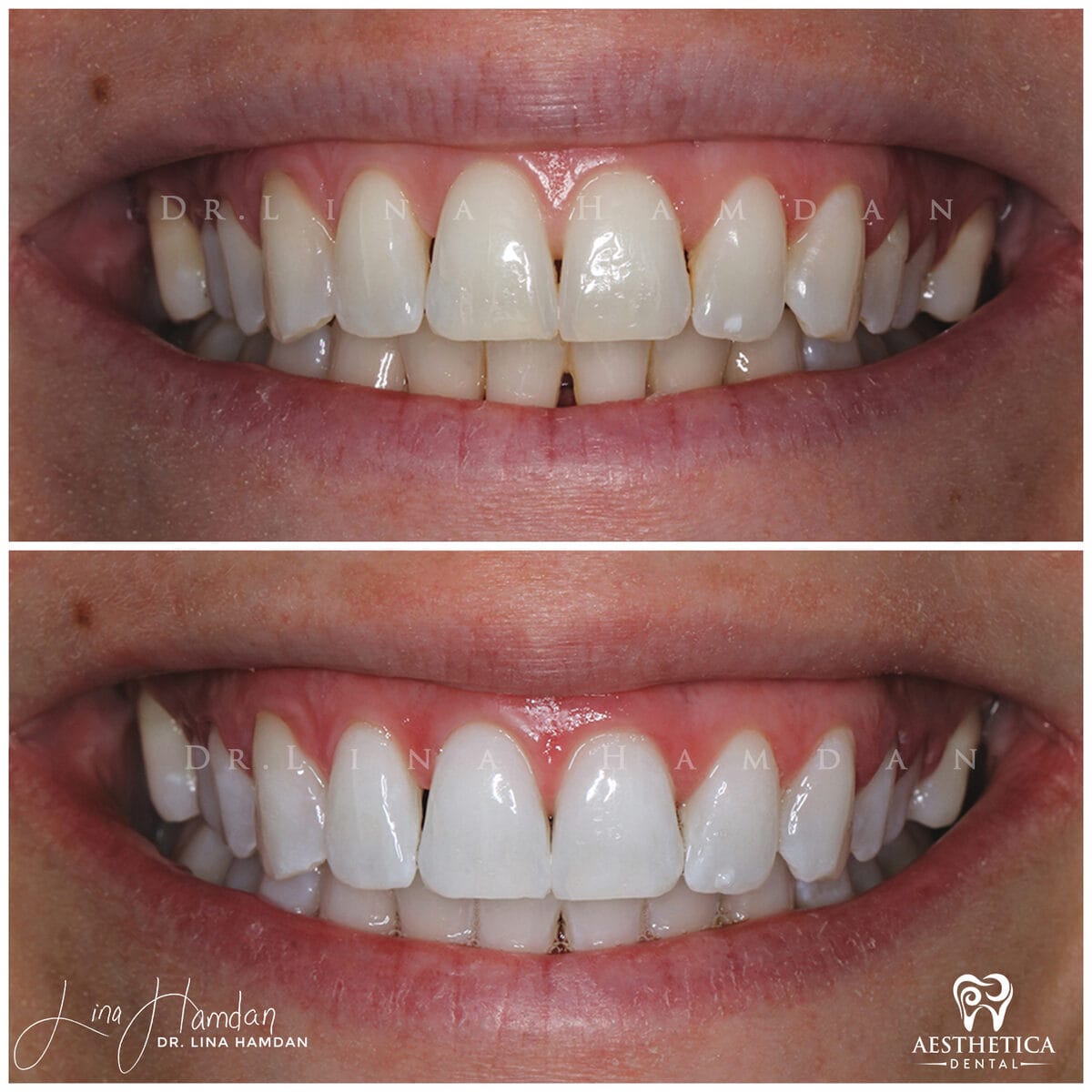
Recent results
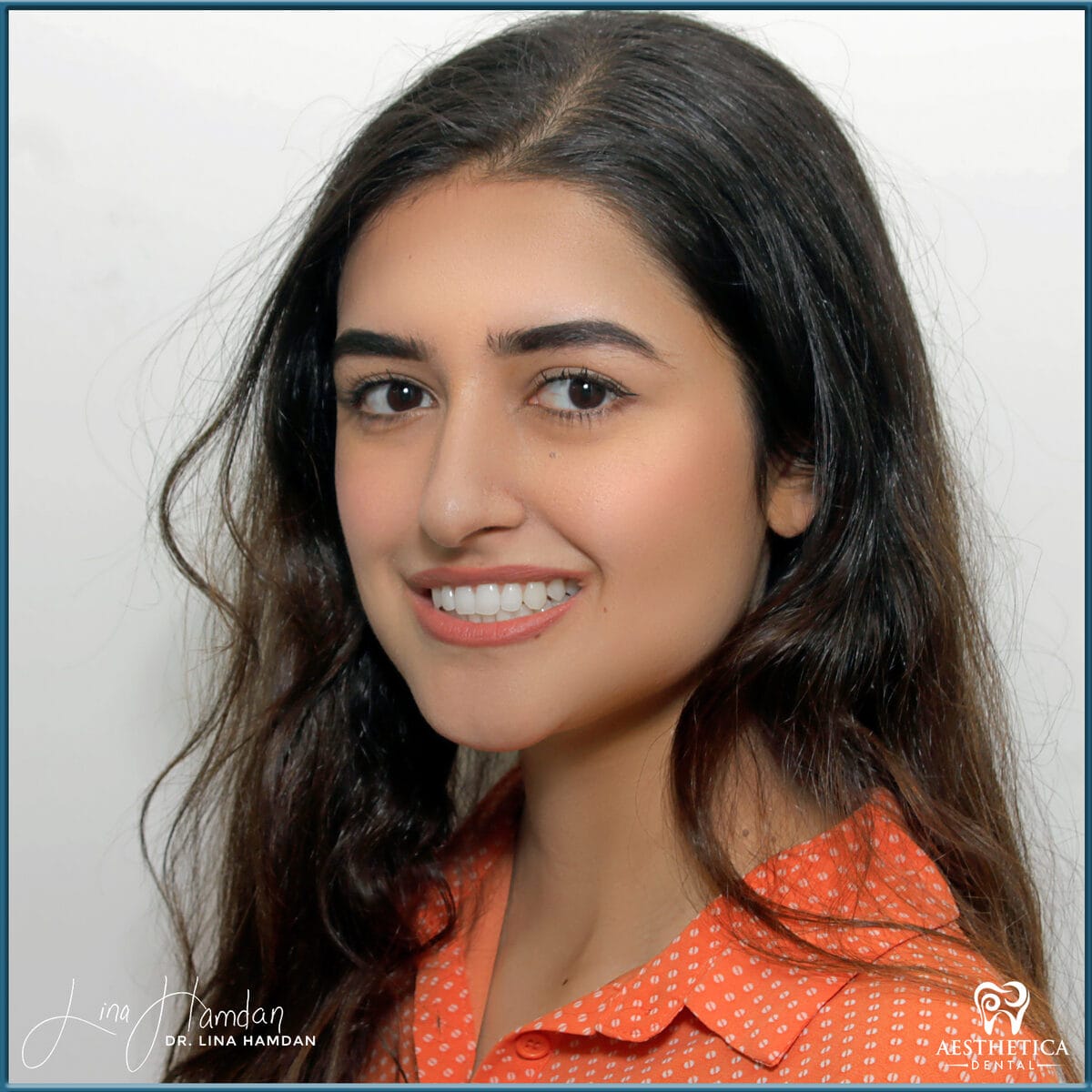
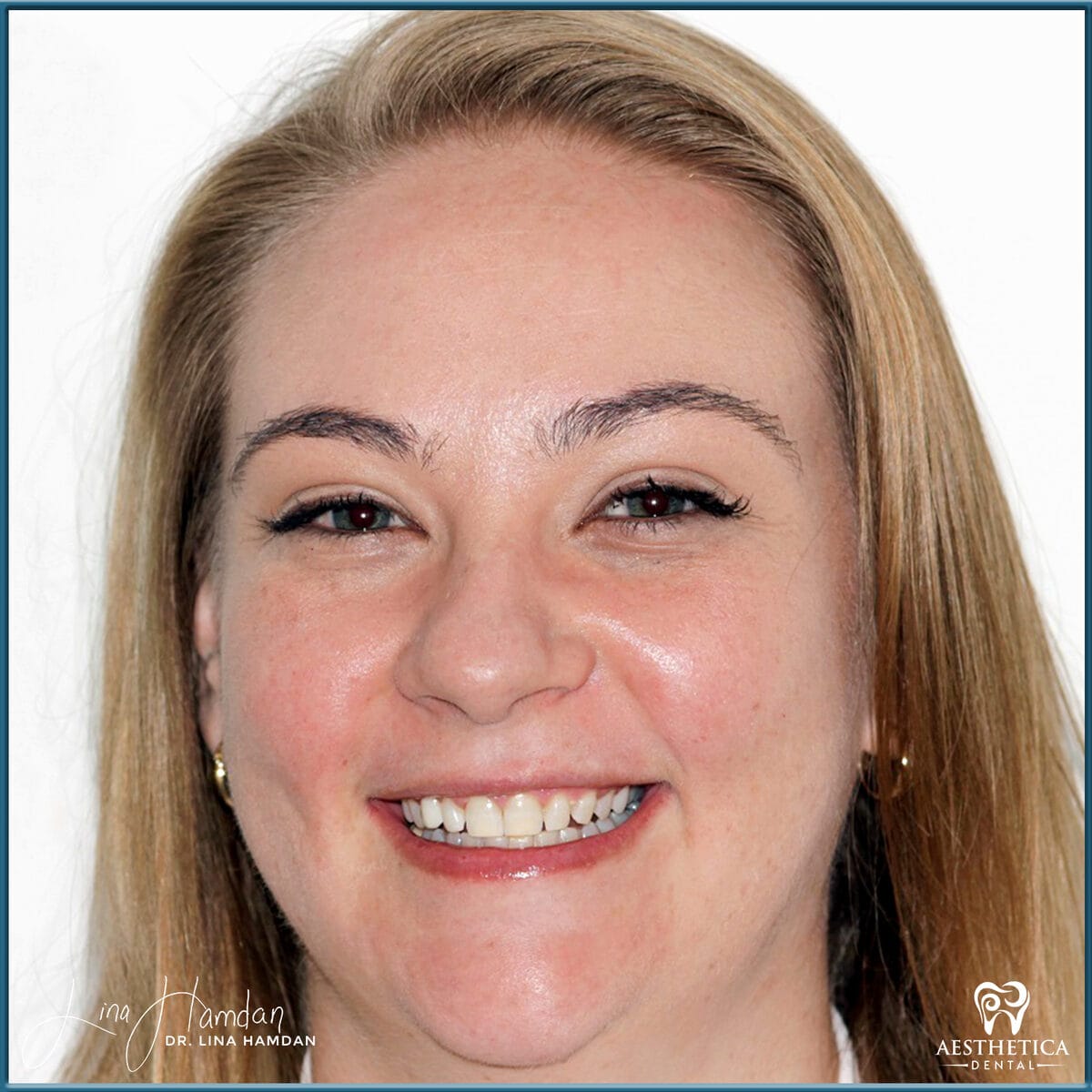
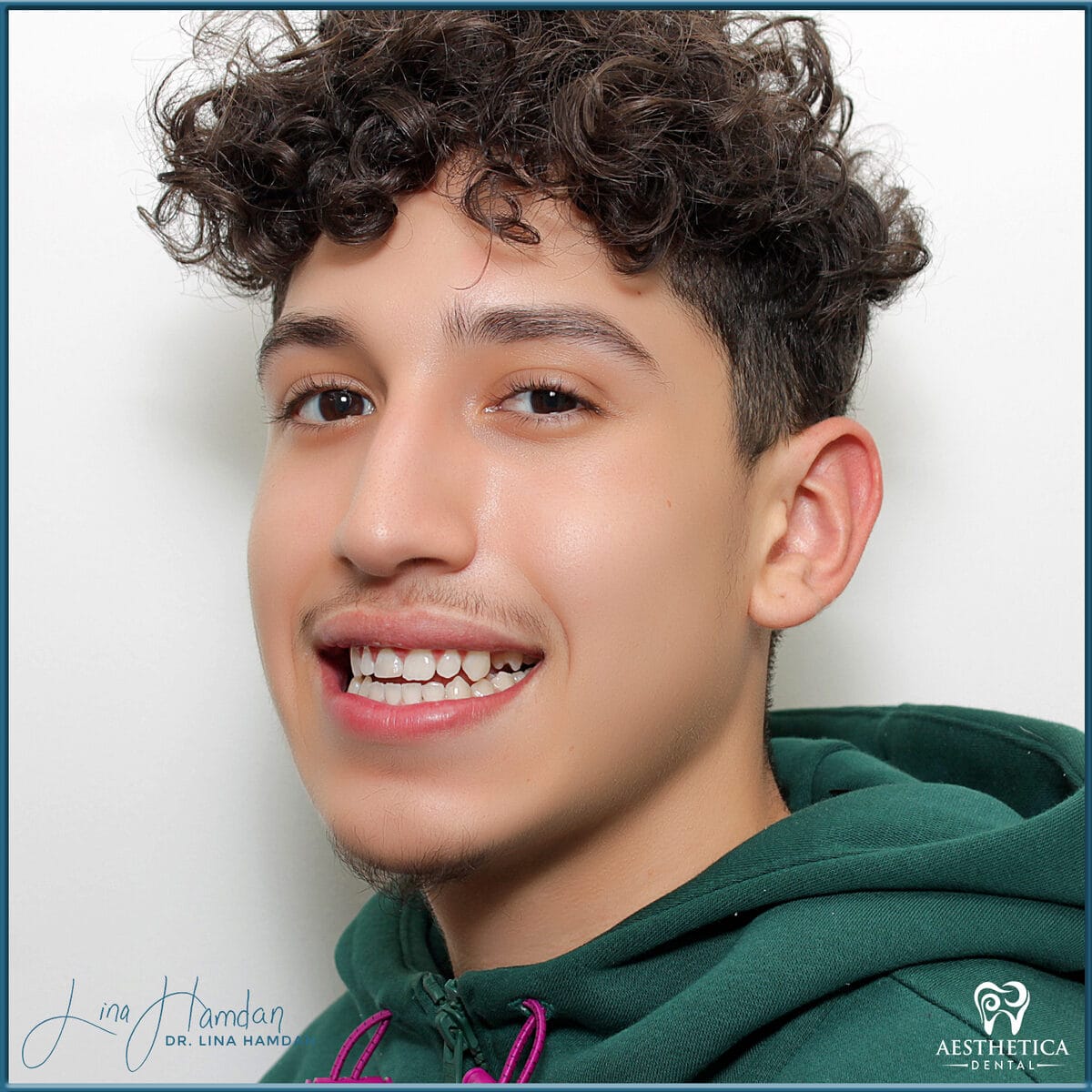
Cases from the practice.
Real before-and-after photos from patients in Dr. Hamdan's care.










Questions
Frequently asked.
How white is too white?
There is a shade beyond which teeth begin to read as unnatural: flat, opaque, and disconnected from the rest of the face. Dr. Lina aims for a shade that lifts the smile without crossing that line.
How long do results last?
Professional whitening results typically hold for one to two years, depending on diet, smoking, and oral hygiene. Touch-up trays at home extend the result indefinitely with low effort.
Is whitening safe for sensitive teeth?
Most patients tolerate professional whitening well. Mild, transient sensitivity is common and resolves within a day or two. Patients with significant pre-existing sensitivity have alternative protocols available; Dr. Lina discusses fit at consultation.
Related services
Also explore
- [PHOTO_SERVICE_VENEERS_PLACEHOLDER]
Porcelain veneers
Considered porcelain veneers.
- [PHOTO_SERVICE_BONDING_PLACEHOLDER]
Composite bonding
Composite bonding.