Porcelain veneers
Considered porcelain veneers.
Hand-finished porcelain veneers, designed around the proportions of your face: a quieter, longer-lasting alternative to the generic Hollywood set.
Why veneers
Porcelain veneers are thin shells of dental porcelain bonded to the front surface of the teeth. They answer a specific set of cosmetic questions: chips, gaps, persistent staining, mild misalignment, or the wish for a more refined smile line. They are a poor answer to others. Dr. Lina is candid about which cases are a fit and which are better solved another way.
Porcelain is the reason this treatment endures. Its optical depth and surface light catch are unmatched by composite resin or generic chairside materials, which is why a well-made veneer reads as a tooth, not as a covering.
What to expect
The process begins with a consultation: an unhurried conversation about what you’d like to change. From there, Dr. Lina builds a design plan, often using digital previews so you see the proposed proportions before any preparation begins.
Preparation is conservative. A thin layer of enamel is reshaped to make room for the veneer, and a precise impression is taken so the lab crafts each piece by hand. Temporaries are placed while the final veneers are made; how you live with the temporaries informs the final design.
The placement appointment is quiet and methodical. Each veneer is checked for fit and color, bonded individually, and refined until the bite is correct and the result looks settled.
Porcelain vs composite
Porcelain veneers and composite veneers solve adjacent problems with different trade-offs. Porcelain holds its color, surface character, and edge integrity longer; composite is more conservative to place and easier to revise chairside. With proper care, porcelain veneers last 10–15 years or longer, while composite veneers last 5–7 years and tend to need more frequent touch-ups along the way.
When veneers are a good fit
Veneers are a good answer when the underlying teeth are healthy, the bite is functional, and the cosmetic goal is one porcelain delivers: improved proportion, color, or surface character. They are not a substitute for orthodontics, restorative work on compromised teeth, or treatment of active gum disease. Where those underlying issues exist, Dr. Lina addresses them first.
Most veneer patients come from Naperville and the surrounding western suburbs; the design and placement appointments are unhurried by design, which is part of why patients are willing to travel for the work rather than choose the closest practice.
The patients who do best with veneers arrive with a clear sense of what they don’t like about their smile and an open mind about how to address it. The work is collaborative.
Recent results
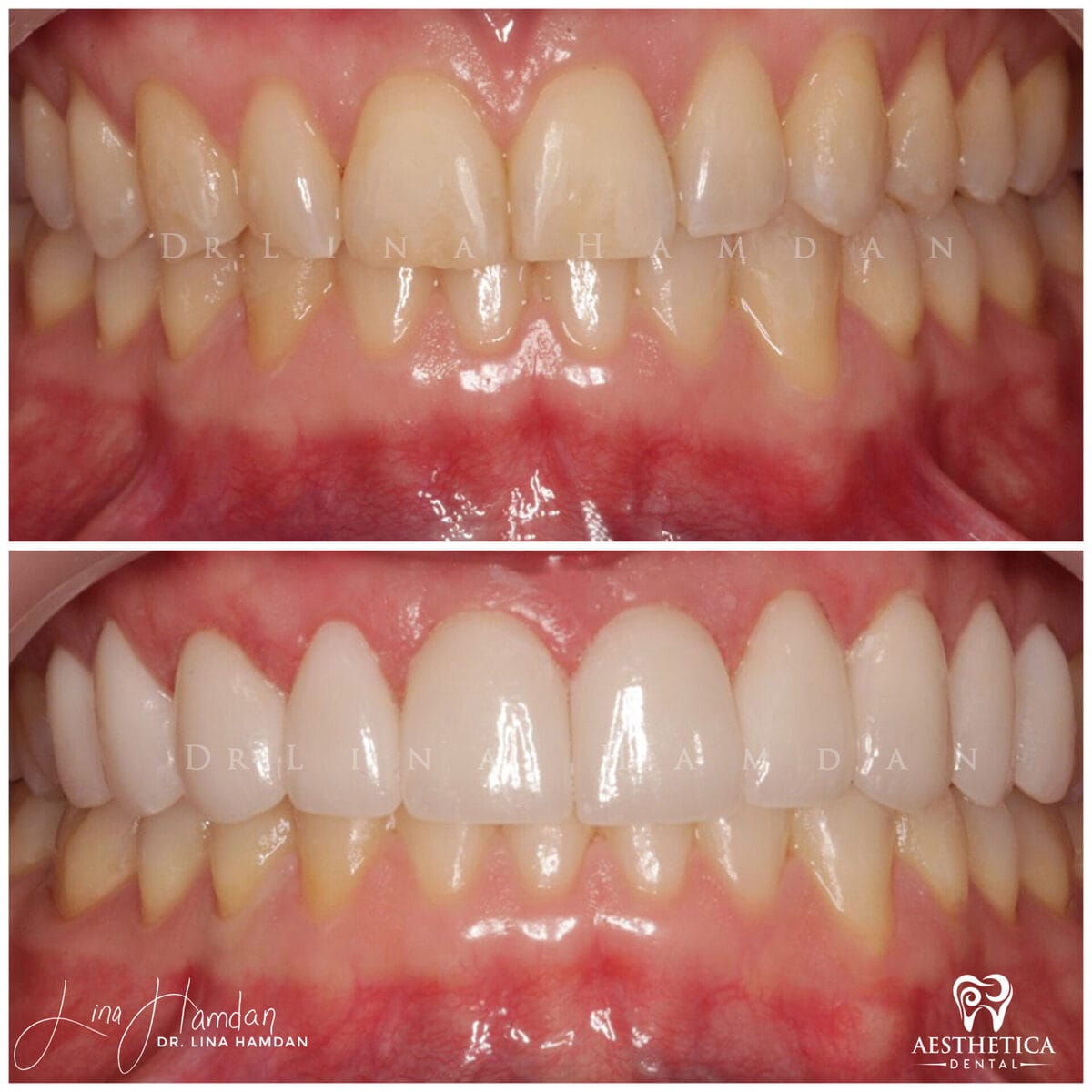
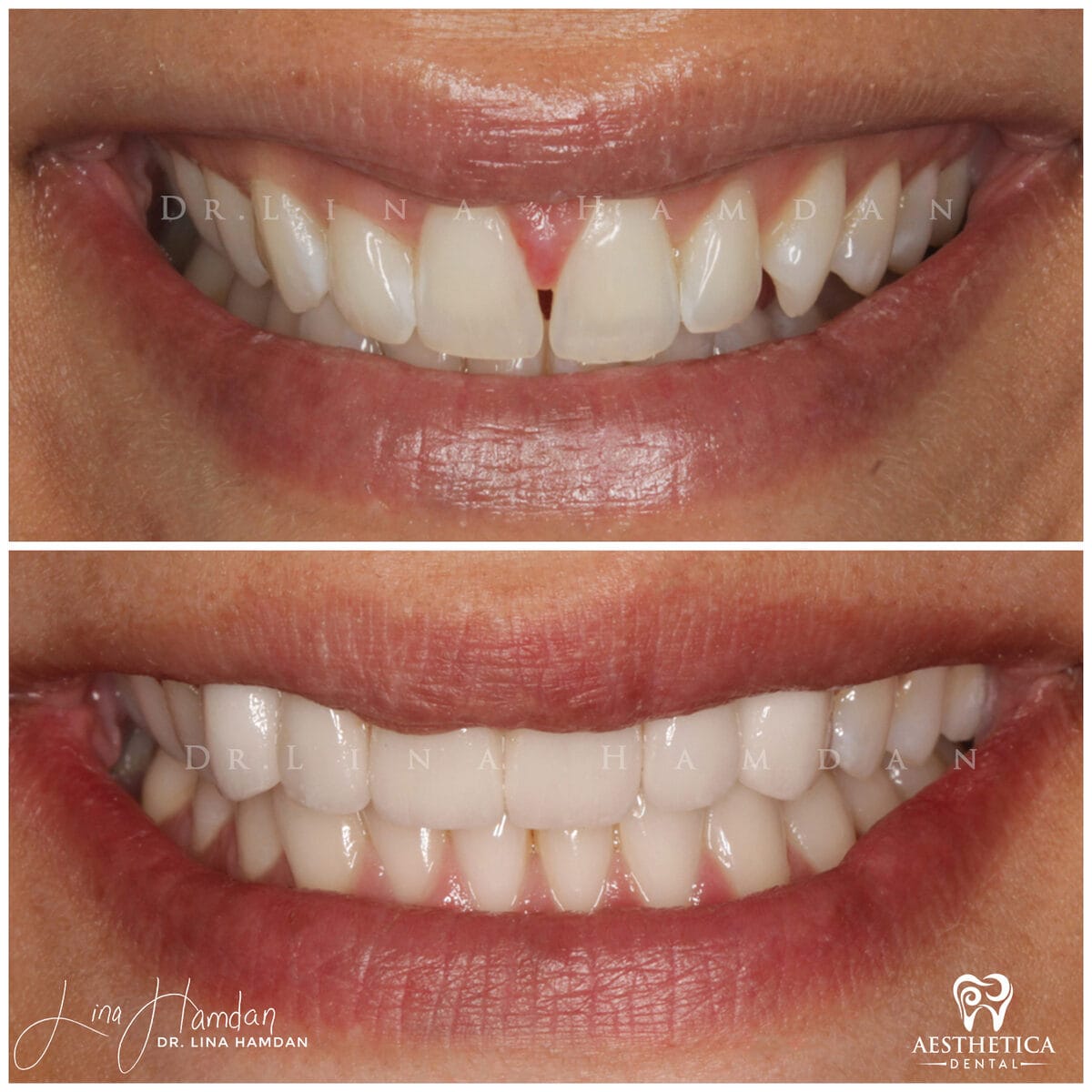
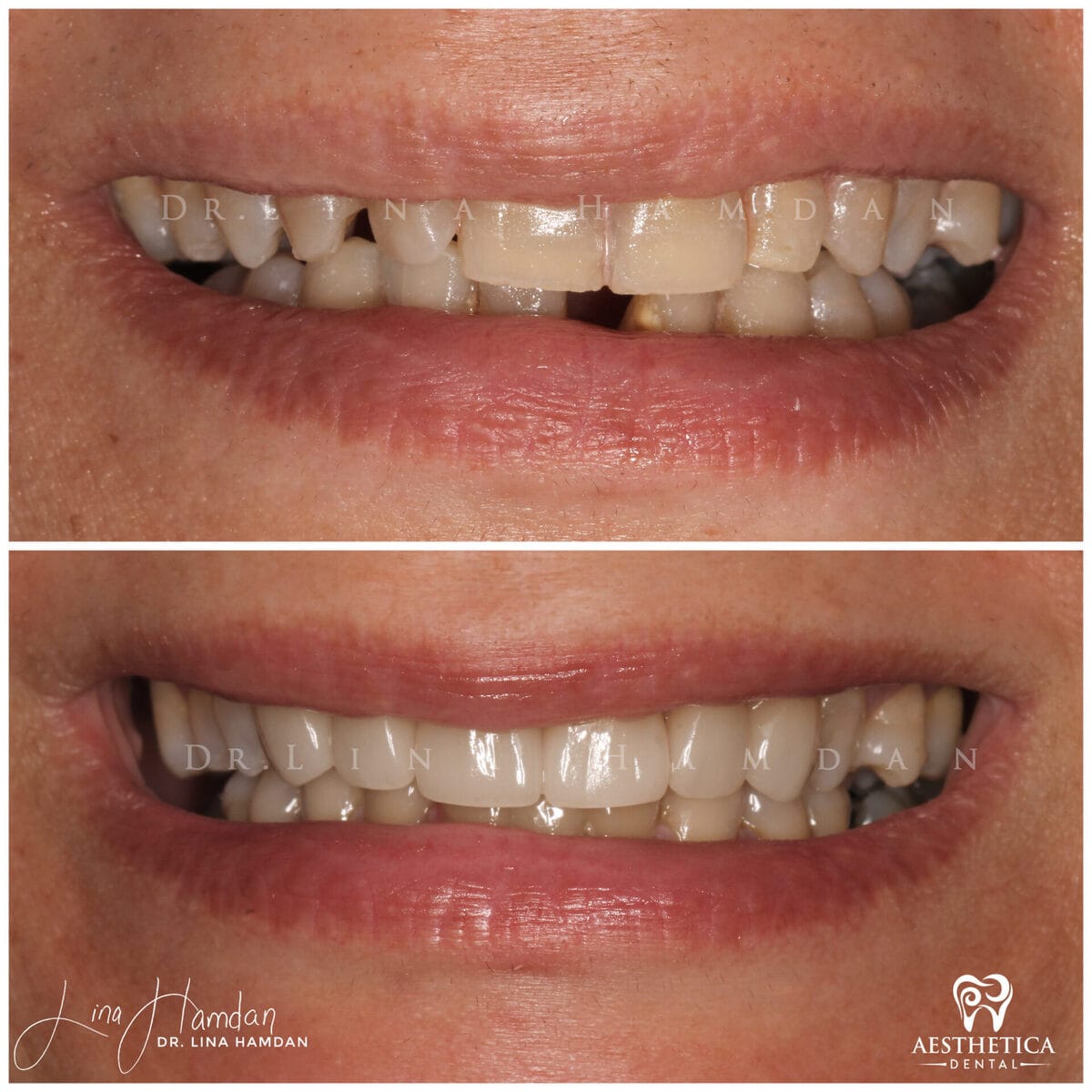
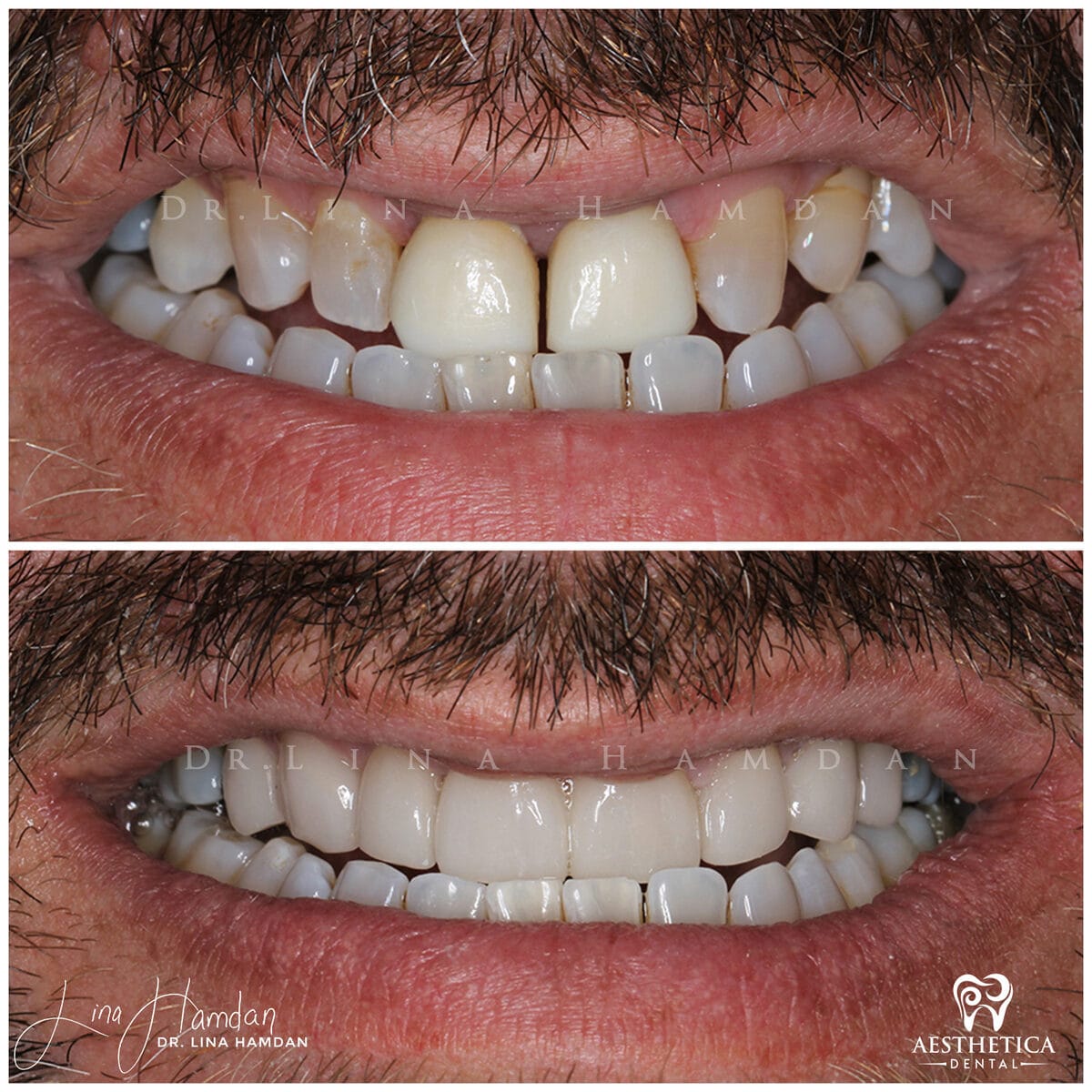
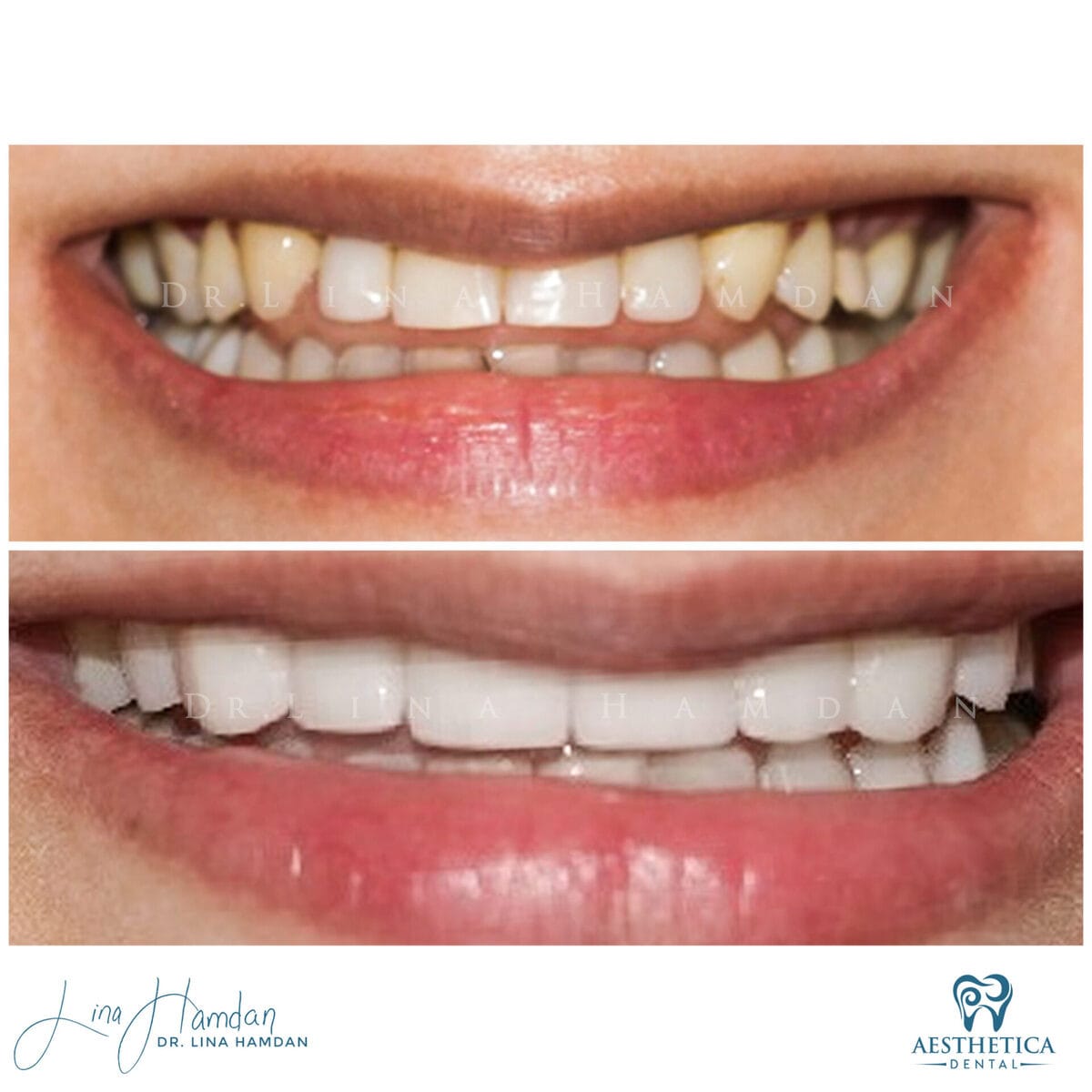
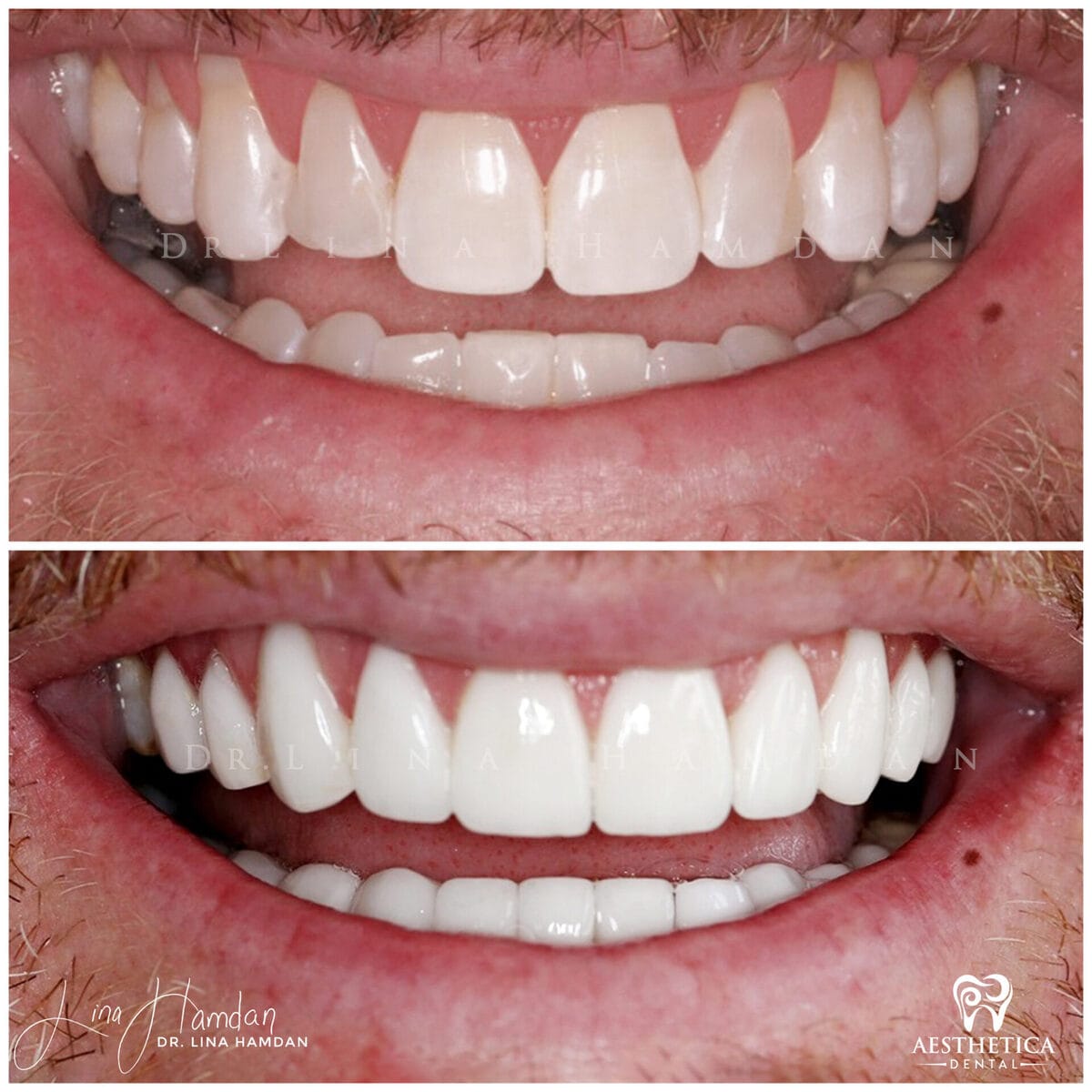
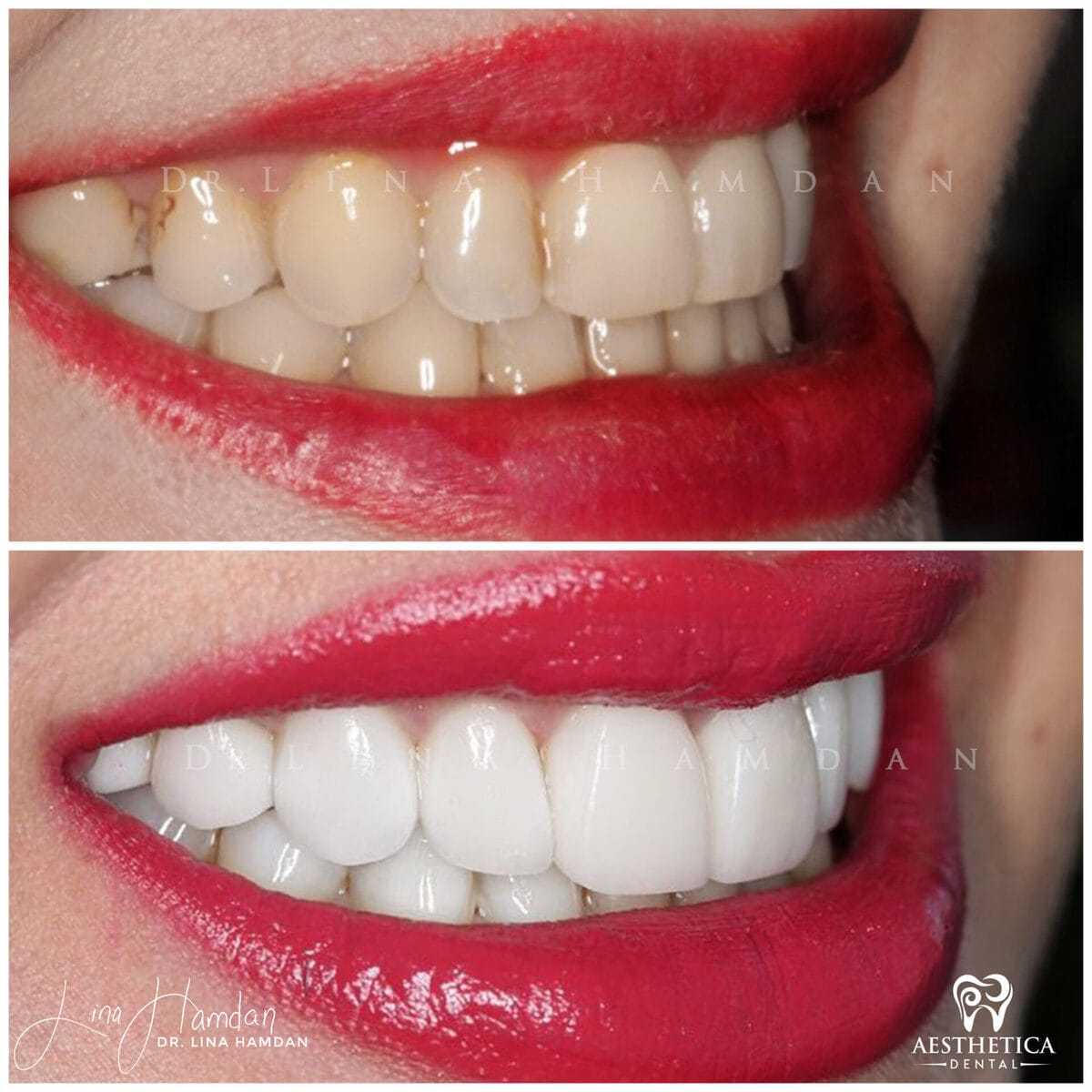
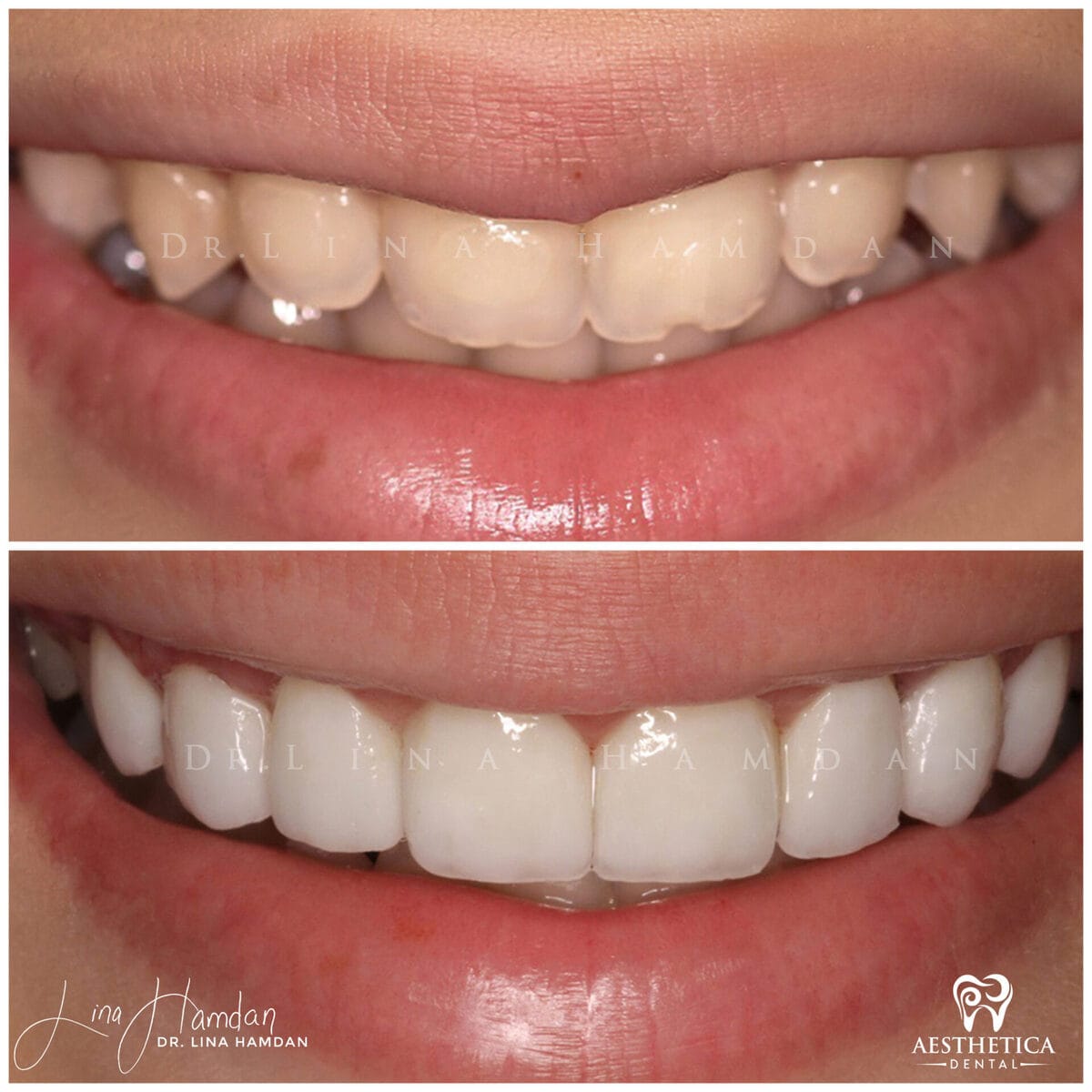
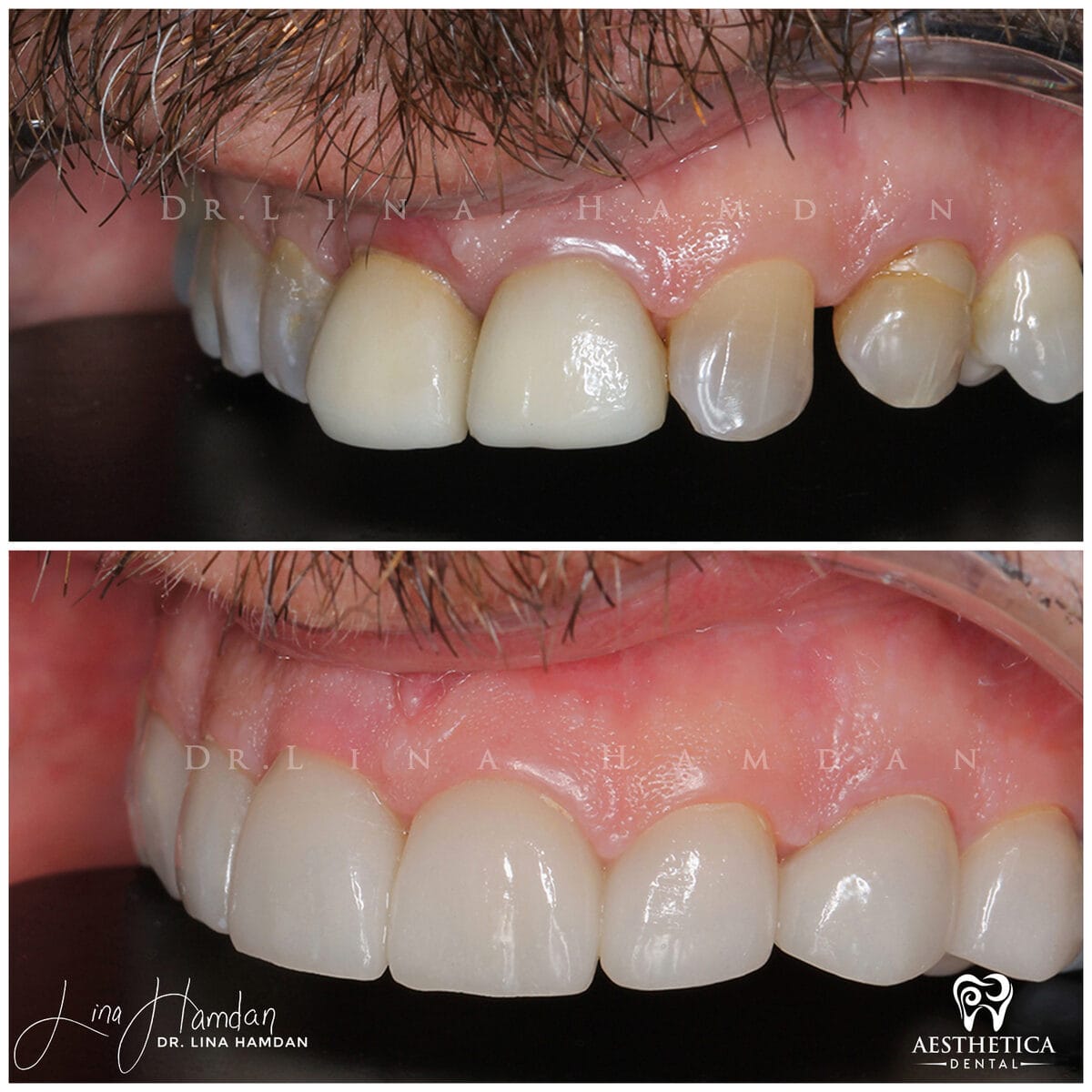
Cases from the practice.
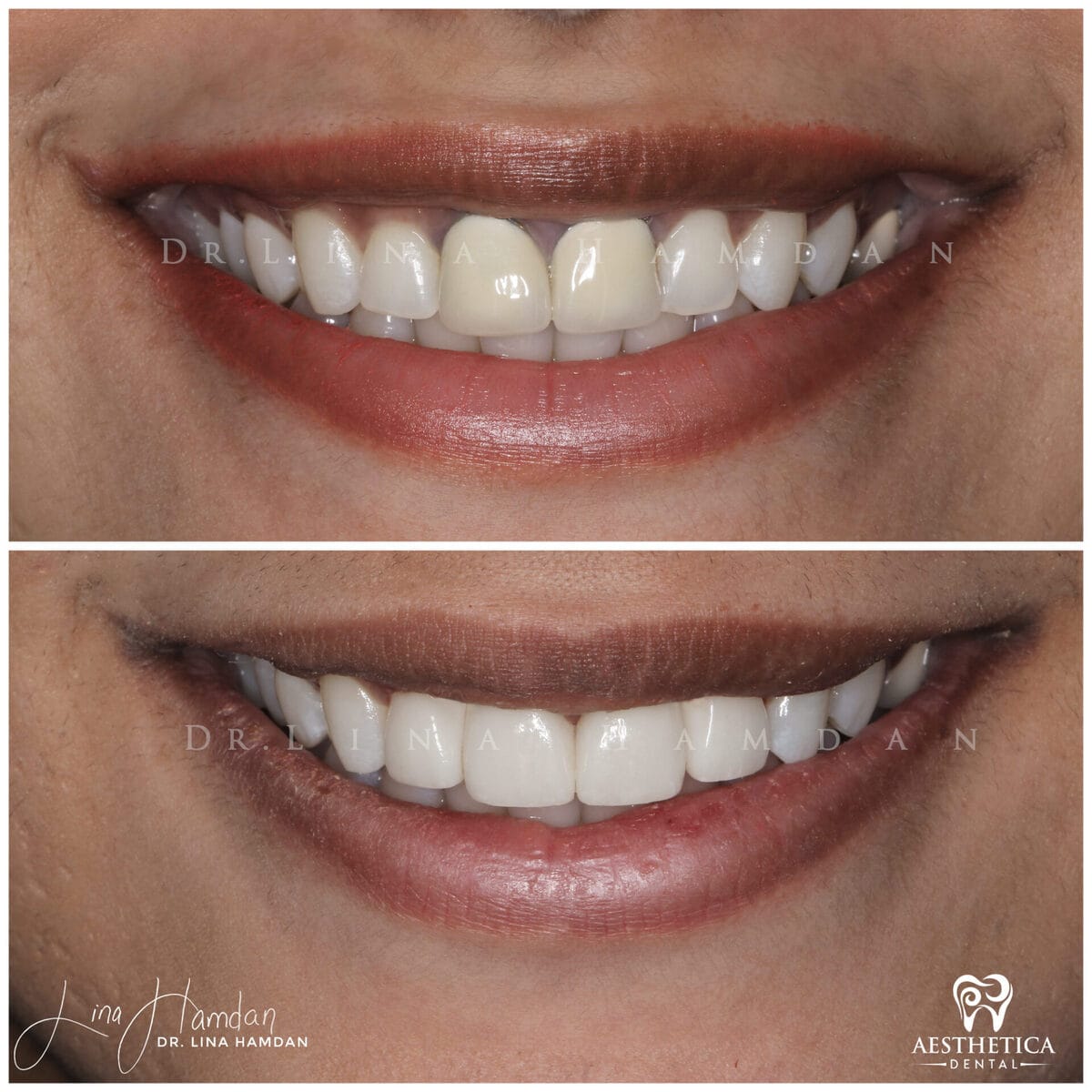
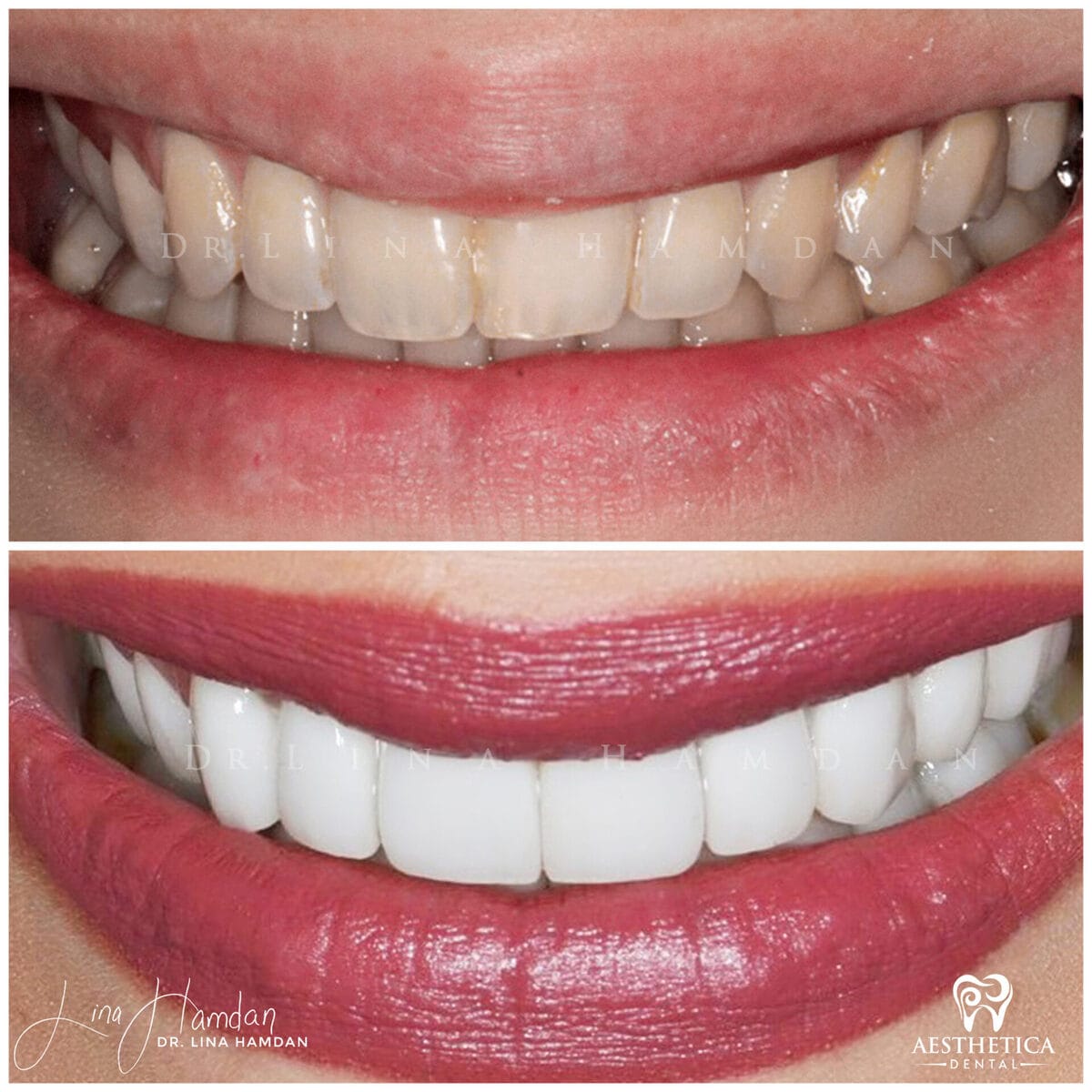
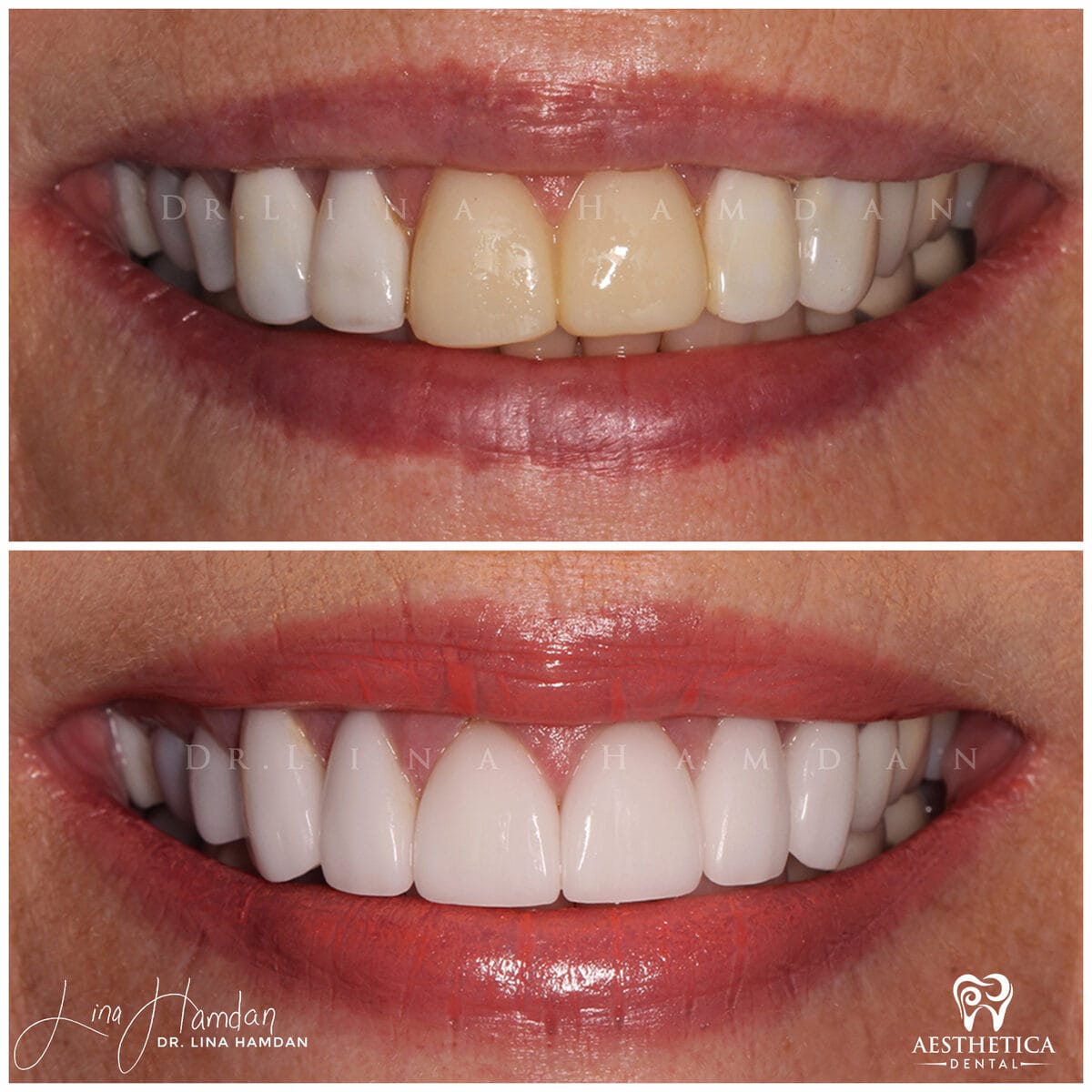
Real before-and-after photos from patients in Dr. Hamdan's care.
Questions
Frequently asked.
How long do veneers last?
Well-designed porcelain veneers, cared for like natural teeth, often last well over a decade. Longevity depends on bite, hygiene, and habits. Dr. Lina walks through the variables specific to your case at consultation.
Are veneers reversible?
Most porcelain veneer cases involve a small amount of enamel reshaping, which is not reversible. In some lower-coverage cases the preparation can be minimal. Dr. Lina discusses what’s appropriate for your goals before any work begins.
How many appointments are needed?
A typical case is a consultation, a design appointment with temporaries, and a final placement appointment, usually spread across two to four weeks. More complex cases may take longer.
How much do veneers cost?
Pricing depends on the number of veneers, the complexity of the design, and the materials used. Dr. Lina provides a written estimate after consultation.
Will they look natural?
That is the whole point. Veneers here are designed around your face, your existing teeth, and the way you actually smile, not lifted from a catalog.
Related services
Also explore
- [PHOTO_SERVICE_SMILE_MAKEOVER_PLACEHOLDER]
Smile makeover
A full re-design of the smile.
- [PHOTO_SERVICE_BEAUTY_INJECTIONS_PLACEHOLDER]
Beauty injections
The smile is more than the teeth.